Choosing a ceiling repair contractor starts with knowing what caused the damage. Water stains, sagging drywall, cracks, and peeling texture can point to leaks, moisture, or structural movement, not just a cosmetic flaw. A qualified local professional can identify the source, explain the repair, and help protect your home from repeat damage.
Choose a ceiling repair contractor who investigates the cause of stains, cracks, sagging, or water damage, not just the visible surface. Look for clear estimates covering moisture correction, drywall replacement, texture matching, priming, painting, cleanup, and insurance. Prompt professional assessment helps protect your home from repeat damage, mold concerns, and unsafe weakened ceilings while ensuring a durable, seamless finish.
A damaged ceiling can be cosmetic, or it can point to moisture, movement, or failing materials overhead. At Mrwalls Drywall & painting, we inspect the cause before we recommend a repair. A qualified ceiling repair contractor protects the appearance, safety, and value of your residential ceiling.
Ceiling damage deserves prompt attention when you see a new stain, a growing soft spot, paint that bubbles or peels, or drywall that sags between framing members. Fine cracks near a seam may be minor, but cracks that widen, run across the ceiling, or return after patching can signal movement or a moisture issue. A musty odor or damp insulation above the room also calls for investigation.
Call us quickly if water is actively dripping, the ceiling feels spongy, or a section is bowing downward. Move people and furnishings away from the area, and address the leak before any finish work begins. As drywall contractors, we identify whether affected drywall can be restored or should be removed and replaced, then blend the repair into the surrounding ceiling surface.
As a drywall contractor, I have learned that ceiling damage rarely starts as “just a spot.” A water stain, hairline crack, or soft area in the ceiling drywall usually points to an issue above it: a plumbing leak, roof leak, excess humidity, poor fastening, or movement in the framing. The visible drywall damage matters, but identifying the source is what helps prevent the repair from failing again.
Water is the most common cause we see at Mrwalls Drywall & painting. It can leave brown rings, bubbling paint, sagging seams, and weakened drywall that may need to be removed rather than patched. Cracks often develop where sheets meet, especially as a home settles or temperature changes cause materials to shift. Older popcorn ceiling finishes add another consideration. Repairs must blend with the existing popcorn texture, and homes built before the mid-1980s may require testing before disturbing popcorn material.
Whether the problem is a small dent or widespread ceiling damage, a sound repair begins with a careful inspection. We assess the drywall, framing, moisture conditions, and finish so the completed ceiling looks clean, stable, and consistent with the rest of the room.
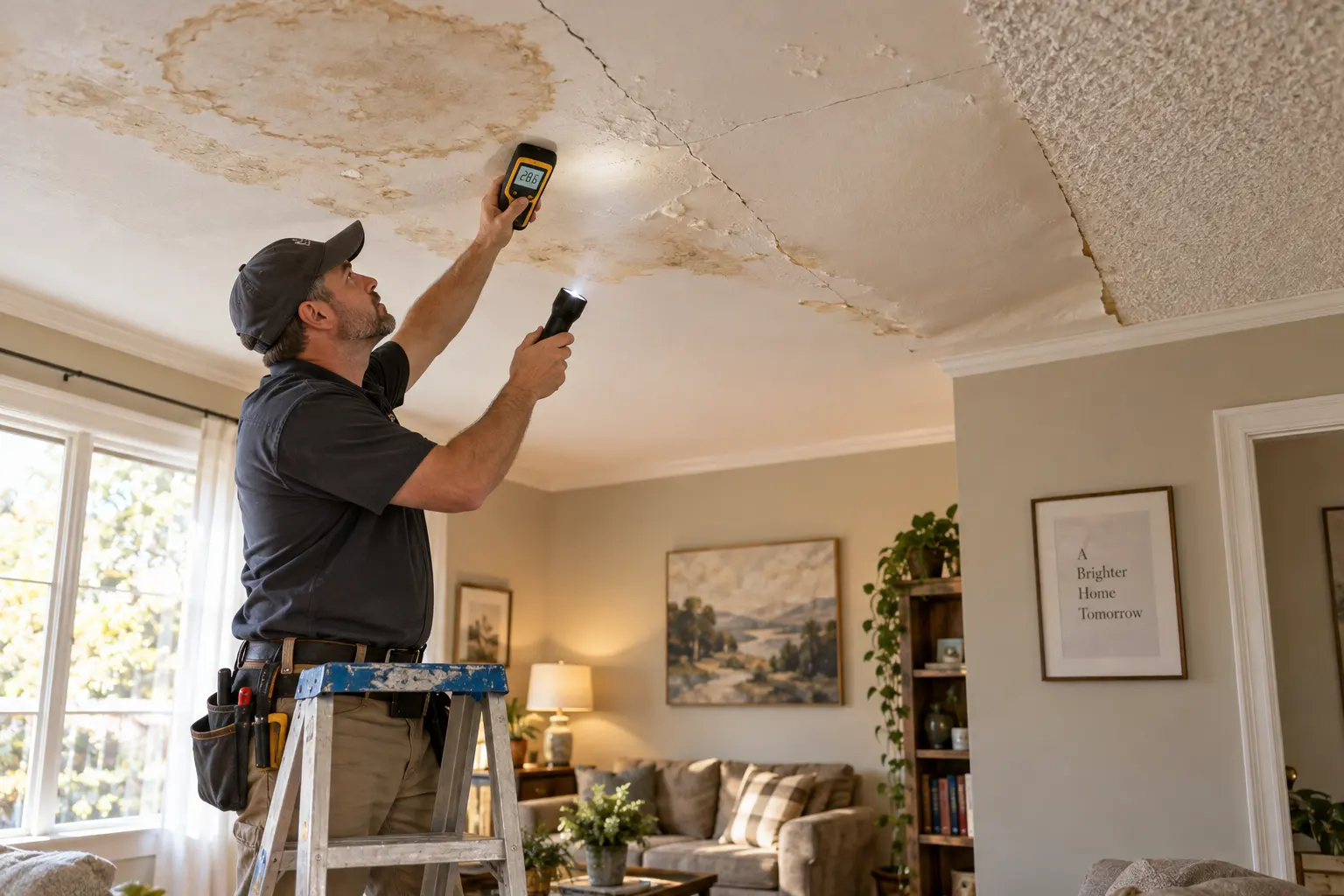
| Visible ceiling symptom | Possible underlying issue | Why inspection matters |
|---|---|---|
| Water staining or brown rings | Plumbing leak, roof leak, or excess humidity | Finding the moisture source helps prevent the stain and damage from returning after repair. |
| Bubbling paint | Water exposure or excess humidity | Moisture conditions should be assessed before repairing the finish. |
| Sagging seams | Water-weakened drywall or poor fastening | The drywall may need removal rather than a surface patch, and fastening should be checked. |
| Soft or weakened drywall | Water damage from a leak or ongoing moisture | Inspection determines whether the drywall remains stable enough to repair. |
| Cracks at sheet joints | Home settling, temperature-related material movement, or framing movement | Checking the drywall and framing helps address movement that could cause cracks to reappear. |
After a leak, the goal is not simply to make a damaged ceiling look new again. As a drywall contractor, I first want to make sure the water source is fully corrected. A repaired ceiling will fail again if a roof leak, plumbing issue, condensation problem, or upstairs overflow is still active. Once the area is dry, we inspect the drywall for staining, sagging, soft spots, loose tape, and hidden moisture around the opening. Small, dry stains may be treatable, but swollen or weakened drywall usually calls for removal. Leaving compromised material in place can lead to crumbling edges, mold concerns, and a patch that does not hold its finish. At Mrwalls Drywall & painting, we protect the room, remove only the damaged sections needed, and rebuild the ceiling with matching drywall, proper support, joint treatment, and primer. We also check the surrounding ceiling so the repair blends naturally rather than creating a noticeable square overhead. If you are unsure how far the water traveled, a professional assessment can prevent a cosmetic repair from becoming a repeat problem.
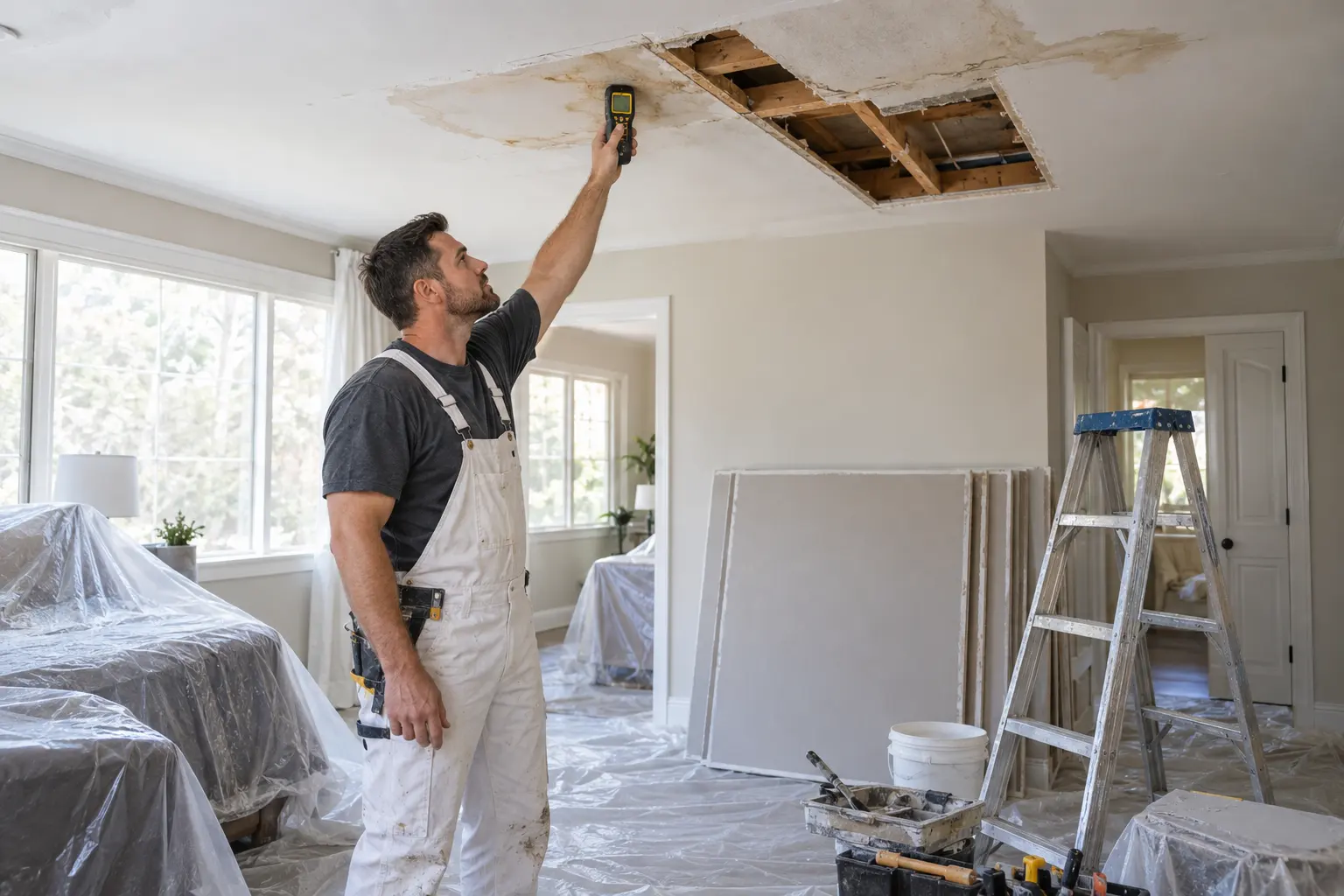
At Mrwalls Drywall & painting, we start every ceiling repair with a careful inspection, not a quick patch. Ceiling damage can come from a roof leak, plumbing issue, settling, poor fastening, or an earlier repair that failed. Before we recommend drywall repair, we look for the cause, test the surrounding area for softness or moisture, and identify how far the damage extends beyond the visible stain or crack.
A sound repair plan should explain whether we can repair drywall in place or need to remove and replace a section of ceiling drywall. We measure the affected area, check the framing above when accessible, and note any insulation, wiring, or texture considerations. For water damage, the source must be corrected and the area fully dry before new material goes in.
Our written plan for residential drywall work outlines the needed demolition, replacement board, taping, finishing, texture matching, priming, and painting. It should also set clear expectations for dust control, drying time, and the final finish. Professional drywall services are not just about hiding a damaged spot; they restore a stable, even ceiling that blends naturally with the rest of the room.
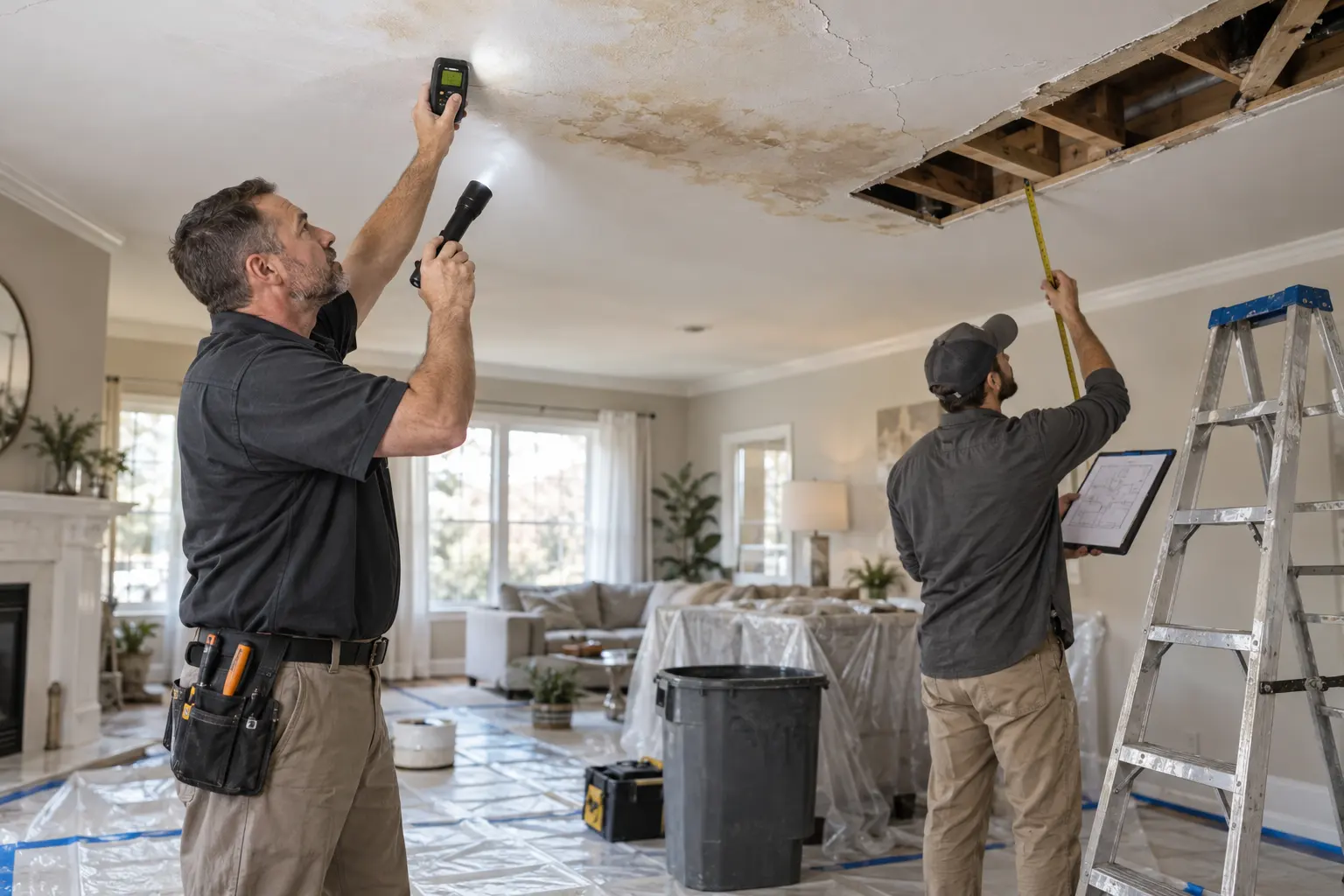
A qualified ceiling repair contractor should bring more than patching skills. At Mrwalls Drywall & Painting, we recommend comparing experienced ceiling repair contractors who understand residential drywall, communicate clearly, and know when a handyman is not the right fit for lasting repairs. While a handyman may handle minor touch-ups, complex damage often requires a specialist with the right repair experience.
Before you accept an estimate, ask your ceiling repair contractor what caused the damage and how they will address it. A crack, stain, or sagging area may need more than a surface patch. If moisture is involved, the source should be corrected before new drywall goes up.
Ask what materials, preparation, and finish work are included. Will they remove loose material, reinforce damaged framing, match the ceiling texture, prime the repair, and paint the area? Clarify whether the price covers protection for floors and furniture, cleanup, and disposal.
It is also reasonable to ask about licensing, insurance, references, and the expected time on site. A dependable contractor will be ready to explain the scope in plain language and make sure you know what to expect before work begins. Mrwalls Drywall & Painting ceiling repair contractors that provides clear recommendations and ceiling repairs built to blend in, not merely cover up damage.
At Mrwalls Drywall & Painting, we treat every ceiling repair as a system, not a quick patch. A clean result starts with finding the cause of the damage, whether it is a past leak, settling crack, loose drywall, or an earlier installation problem. We correct that issue before beginning drywall repair, so the new work has a sound surface to hold onto.
Next, we remove weak material and secure or replace the affected drywall using proper installation methods. For larger openings, we add proper backing and tape the seams carefully. Several thin coats of compound are applied, dried, and sanded between coats to create a flat, durable ceiling surface. This patient preparation is what keeps repaired areas from showing through after paint.
Texture matching requires the same attention. Whether your room has a smooth finish, orange peel, knockdown, or a popcorn ceiling, we test the pattern and blend it into the surrounding area rather than leaving an obvious edge. Once the texture is cured, we prime repairs to prevent flashing, then apply quality ceiling paint for an even sheen and consistent color. If you are considering professional help, our drywall contractor team can assess the damage and recommend the right repair approach.
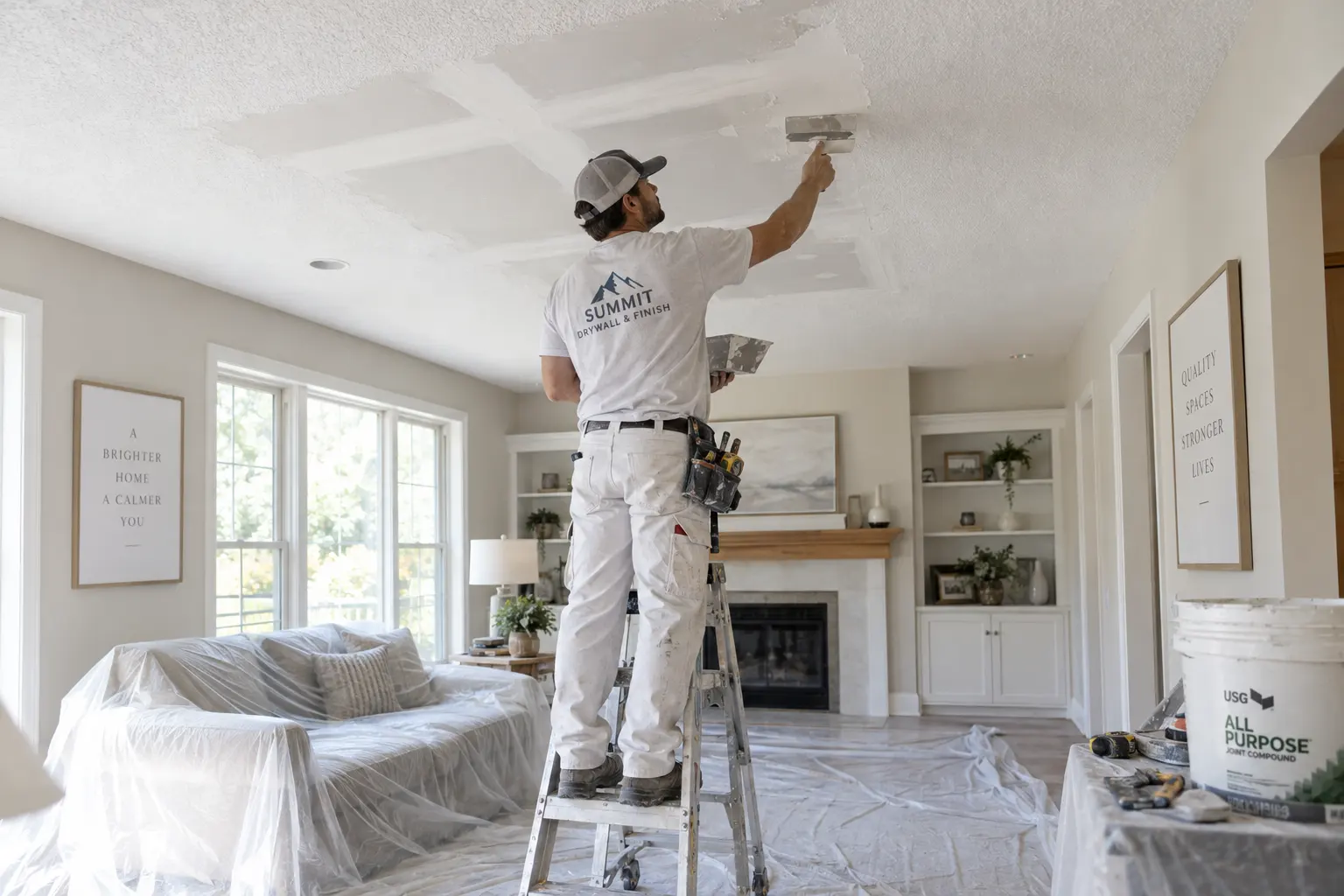
As a ceiling repair contractor, I’m often asked whether a stain, crack, or sagging spot can wait. My advice is simple: if the issue is new, growing, soft to the touch, or connected to a leak, have it inspected soon. A damaged ceiling can hide wet insulation, weakened drywall, mold growth, or an active plumbing or roof problem. Repairing the surface without finding the cause can lead to the same failure again.
Another common question is whether drywall services will create a major mess. At Mrwalls Drywall & painting, we protect nearby floors and furnishings, control dust where possible, and keep the work area organized. Most smaller repairs can be completed with limited disruption, though drying time between coats may require more than one visit.
For an accurate recommendation, we look at the ceiling material, the size and location of the damage, and any signs of moisture. We then explain the repair approach clearly, whether that means patching, replacing a section, matching texture, or preparing the ceiling for paint. If you are concerned about a ceiling in your home, contact our team for an assessment and a straightforward repair plan.
Call a professional for sagging drywall, active leaks, soft or spongy areas, growing stains, bubbling paint, recurring cracks, or a ceiling that bows downward. These signs can indicate moisture damage, framing movement, or weakened materials that need more than a cosmetic patch.
It depends on the condition of the drywall and whether the water source has been fixed. Small, fully dry stains may be sealed and refinished. Swollen, sagging, soft, mold-affected, or crumbling drywall generally should be removed and replaced for a stable repair.
Yes. The roof leak, plumbing leak, condensation issue, or overflow must be corrected first. The ceiling area also needs time to dry completely before replacement drywall, joint compound, texture, primer, and paint are applied.
A skilled drywall contractor can blend repairs into smooth ceilings and common textures such as orange peel, knockdown, and popcorn. Proper texture matching, priming, and painting help prevent the repaired section from appearing as a noticeable patch.
Not always. Fine cracks along drywall seams can result from normal settling or seasonal movement. However, cracks that widen, spread across the ceiling, return after repair, or appear with staining or sagging should be inspected for moisture, loose drywall, or framing concerns.
A clear estimate should identify the likely cause of damage and list demolition, drywall replacement or patching, backing or framing repairs, taping, finishing, texture matching, priming, painting, dust protection, cleanup, and disposal. Ask about timing, insurance, and whether the contractor will inspect for moisture.
Popcorn ceiling repairs require extra care because the texture must be blended with the surrounding finish. For homes built before the mid-1980s, testing may be appropriate before disturbing the material. A contractor can recommend the proper preparation and repair method.